Most institutions have an AI policy, but few can actually uphold it. Here’s what it takes to turn a policy document into governance that lasts.
Picture the moment an academic integrity case reaches your desk. A student turns in a paper that a faculty member is convinced AI mostly wrote. Everyone reaches for the institution’s AI policy, and that’s where it gets uncomfortable. The policy describes how the work should have been done, yet nobody can show how it actually came together.
Higher education has spent two years writing AI policies. Making them work in daily practice has proven much harder, and that’s the part a CIO ultimately answers for. It’s also where AI governance tends to break down.
The scale of the problem is evident in a 2026 EDUCAUSE survey, in which only 54% of higher education staff and faculty reported being aware of the policies meant to guide AI use on their campus. When half of the people who are expected to follow a rule can’t name it, the behavior goes unseen.
For a CIO accountable for managing risk without slowing the institution down, that blind spot is a real problem. When an integrity case, an audit, or an accreditation review asks how AI is actually being used, there’s no clear answer to give. You’ve written the rules, but you still can’t see who follows them.
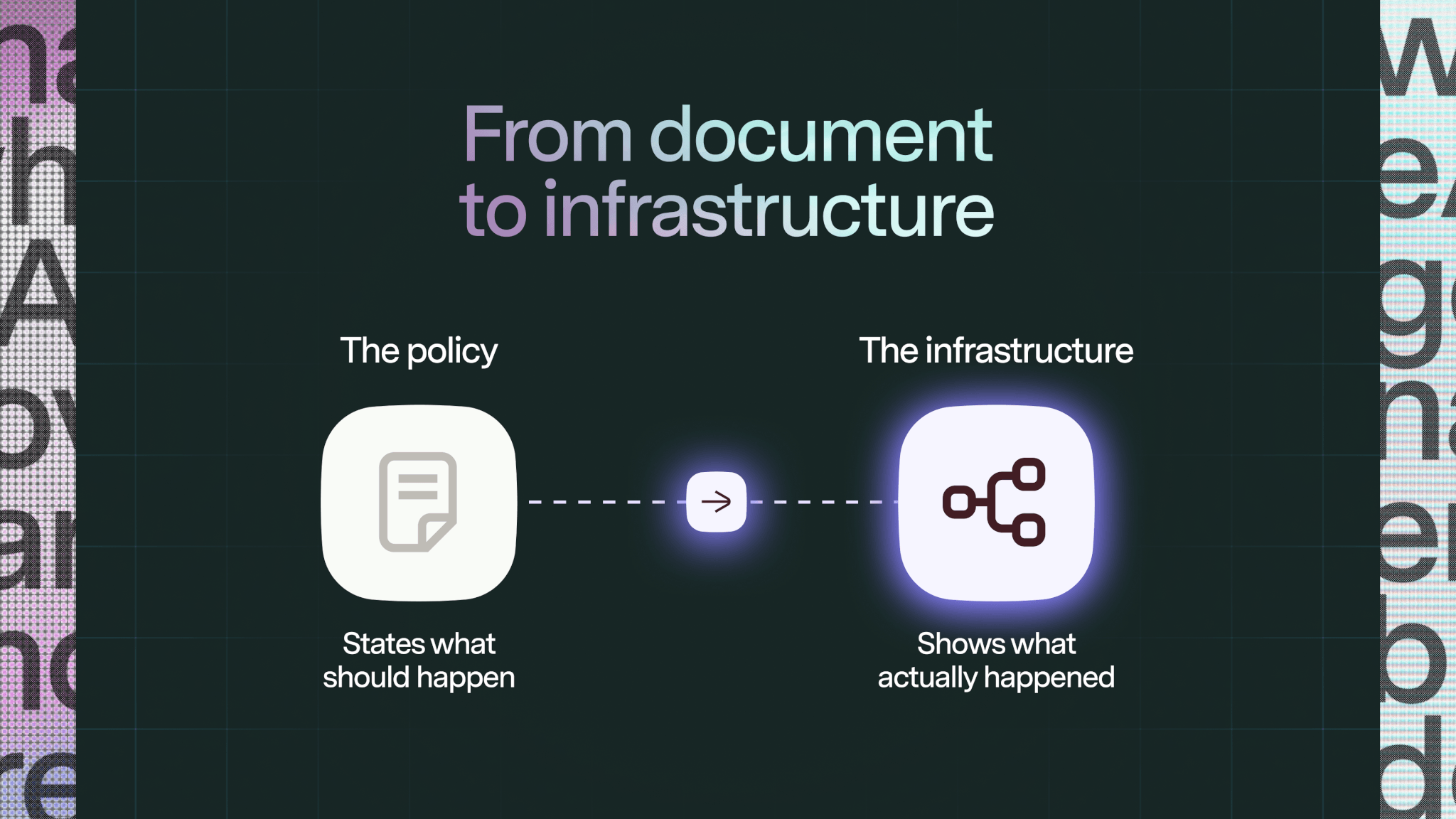
A policy states intent, while governance offers follow-through
A written policy tells your campus what good AI use should look like. What it looks like in practice is harder to see because it’s spread across thousands of assignments and departments that may interpret the policy differently.
Governance is the capability that closes that gap—seeing how AI shows up in real student work, holding one standard as that work happens, and producing a record when someone asks for one. Build that, and a policy stops being a statement of intent and starts functioning as infrastructure. The encouraging part is how close that capability already is, running quietly inside tools your campus uses every day.
Where to begin building governance
Moving from a policy document to working governance requires a handful of deliberate steps. Most of them build on systems your campus already runs.
1. Start by seeing
Governing something you can’t see is guesswork. Get an honest picture of how AI already shows up across campus—in student assignments, in the tools faculty use to provide feedback, and in the consumer apps people reach for when nothing official is on offer.
2. Work with the tools already in place
The visibility you need most likely lives in the writing and productivity tools students and faculty already use every day. Look there before evaluating anything new, and ask the people using them what they rely on and what they wish it did. The gap between the two usually points to where visibility is easiest to add.
3. Put the standard where the work happens
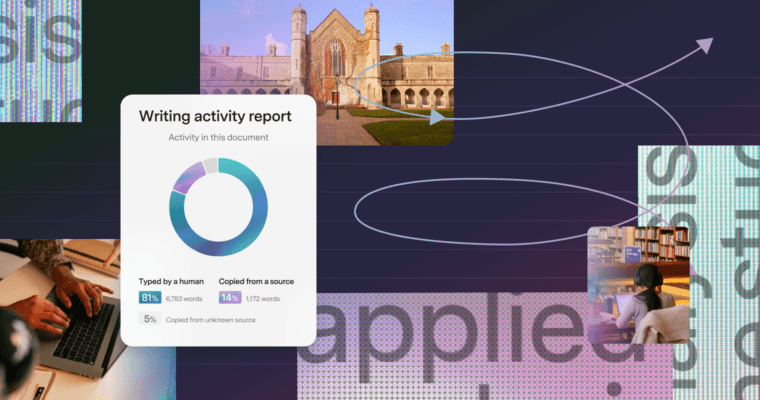
A policy that lives on a website is easy to forget by midterm. Guidance works best when students meet it while they write, through assignment instructions, course expectations, and the tools they already use. Some writing tools also record how a draft took shape, including the revisions, the sources, and how much of the work the student wrote themselves. That record lets you check real work against your standard.
Plenty of tools help a student write; far fewer leave a clear account of how the writing was done.
4. Decide what proof looks like now
When an integrity or accreditation question arises, you’ll want a record to point to, such as a report showing how an assignment was written from the first draft through to the final. Decide what that evidence looks like before the question comes.
5. Recruit your advocates
The faculty already using AI thoughtfully are your most credible proof. Give them a way to model good practice, and let their example do the persuading.
How Authorship makes higher ed AI policy real
Grammarly Authorship shows how a piece of writing came together—the drafting, the revisions, and how much of the work the student did themselves. In the background, it answers the one thing a policy can only assert: how the work was actually done.
Its power comes from a simple design choice: Both sides see the same thing. A student views the same record their instructor does, so it reads as a fair account of their process. That shared view is what makes transparency workable, keeping everyone’s attention on the learning itself. Detection can flag whether AI was involved; Authorship shows how the writing developed. An institution with both tools has a fuller, fairer basis for the calls it has to make.
This is already happening at scale. Students have generated more than 5 million Authorship reports. And the approach has peer-reviewed backing. A University of Florida study published in TechTrends analyzed how 310 students used AI in their writing. The professor who ran the study, Dr. Brian Harfe, describes Authorship as facilitating the writing process “in a more collaborative way with students.”
It also fits the campus you already have. Authorship runs on the writing support students and faculty use daily, on a compliance foundation built for institutions—FERPA, SOC 2 (Type 2), and HIPAA-compliant—with documentation your security office can review. It adds visibility to the tools already in place, so governance becomes something your campus can operate day-to-day.
From a policy on paper to governance that lasts
The institutions handling AI well share one trait—they can see how AI is used, hold a consistent line, and show their work when it counts. That’s the move from a document to infrastructure, and it’s more within reach than most CIOs expect.
To see where your own institution stands, the Higher Ed AI Policy Compass is a good place to start.
Frequently asked questions
1. What’s an AI policy in higher education?
An AI policy in higher education is an institution’s written statement of how students, faculty, and staff are expected to use AI, covering academic integrity, approved tools, and data handling. Almost every institution now has one. The harder task is applying that policy to daily practice.
2. Why isn’t an AI policy enough to govern AI use?
A written policy states intent, but it can’t show how AI is actually being used. In a 2026 EDUCAUSE survey, only 54% of higher education staff and faculty were aware of the policies meant to guide AI use on their campus. Without visibility into real use, a policy governs very little.
3. How can an institution operationalize its AI policy?
It takes three things: visibility into how AI shows up in student work, a consistent standard applied where the work happens, and a record you can point to when a question arises. Most of it can be built on the writing tools a campus already runs.
4. What’s Grammarly Authorship, and how does it support responsible AI use?
Grammarly Authorship records how a piece of writing came together: the drafting, the revisions, and how much of the work was the student’s own. It gives instructors and students a shared, verifiable record of how work was done, which turns an AI policy from a statement into something an institution can see and support. It’s one way to make responsible AI use visible in higher education.
5. What’s the difference between AI detection and Grammarly Authorship?
AI detection estimates the likelihood that AI was involved and returns a score. Grammarly Authorship captures how the writing actually developed, step by step, as a record. Read together, they give an institution a fuller, fairer basis for academic integrity decisions.
6. How does Grammarly Authorship support FERPA requirements?
Grammarly offers FERPA-aligned terms for institutions and is independently assessed through reports like SOC 2 (Type 2), with documentation your security office can review. Authorship runs on that same foundation, so it adds visibility without a separate system to govern.