Key takeaways
- ChatGPT generates text based on the data it was trained on, raising concerns about plagiarism.
- AI-generated content is not inherently plagiarism, but improper use can lead to ethical and academic issues.
- AI detection tools can help assess content originality, but they’re not always accurate.
- Best practices for maintaining integrity while using AI include citing AI assistance, verifying sources, and using tools like Grammarly Authorship for transparency.
From academic writing to business communication, OpenAI’s ChatGPT has transformed the way people create content. However, as AI-generated writing becomes more common, a key question arises: Is ChatGPT plagiarism?
In this article, we examine how ChatGPT generates text, whether it can be considered plagiarism, how to detect AI-written text, and best practices for using AI responsibly. While this article focuses on ChatGPT, the insights apply broadly to other generative AI tools as well, including Gemini, Claude, and Copilot.
Table of contents
- What is plagiarism?
- How ChatGPT generates content
- Is ChatGPT itself plagiarism?
- Can using ChatGPT lead to plagiarism?
- How to avoid plagiarism when using ChatGPT
- Is ChatGPT plagiarism? Final thoughts
- Is ChatGPT plagiarism FAQs
What is plagiarism?
Plagiarism is the act of using someone else’s work—whether words, ideas, images, or code—without proper attribution. It is a serious ethical and academic issue that can undermine credibility and violate standards in education, journalism, and professional writing. Whether intentional or accidental, plagiarism can lead to significant consequences.
Different types of plagiarism
Plagiarism takes many forms, and even unintentional instances can have serious academic and professional consequences. Here are a few examples of the most common types of plagiarism:
- Direct plagiarism: Copying text from a source without citation or quotation marks
- Paraphrasing plagiarism: Rewriting someone else’s ideas without proper credit
- Self-plagiarism: Reusing your own work without disclosure, such as submitting the same assignment for multiple classes
- Accidental plagiarism: Forgetting to cite sources, misquoting, or improperly formatting citations
- AI plagiarism: Using AI-generated content without attribution and presenting it as original work, especially in academic or professional settings
How does ChatGPT generate content
ChatGPT generates text using AI-powered language prediction. Rather than copying content from one specific source, it analyzes language patterns in vast amounts of publicly available text, books, articles, and other written material in order to generate original responses in real time. Because ChatGPT does not store conversations or recall exact passages from its training data, every response is generated from scratch. However, because ChatGPT is trained on publicly available information, outputs may echo phrasing or ideas that resemble existing content, especially when discussing well-known facts or widely covered topics. This isn’t considered plagiarism because it doesn’t pull from one specific source but rather generalizes from vast amounts of publicly available information.
- Understanding input: When you enter a message, ChatGPT breaks it into small units (tokens) to interpret meaning, helping it recognize language structures and intent.
- Processing context: To produce relevant responses, it considers both the current input and previous conversation history (if available), allowing for coherent and contextual replies.
- Generating text: Using a deep learning model, it predicts and forms sentences dynamically, selecting words based on learned probabilities rather than retrieving prewritten content.
Is ChatGPT itself plagiarism?
No, ChatGPT itself isn’t inherently plagiarism, but whether its output counts as plagiarism can depend on how the content is used. Plagiarism is the act of copying text from a source or using someone else’s ideas without giving proper credit. When it comes to AI-generated responses, some argue that using them is not technically plagiarism because the content is produced by a machine learning model rather than copied from a single identifiable author.
However, using AI-generated content without acknowledgment can still raise ethical and academic integrity concerns, especially if someone presents the work as entirely their own. In educational and research settings, proper citation and transparency are expected for all sources, including AI tools, to maintain honesty and credibility.
Can using ChatGPT lead to plagiarism?
Relying entirely on ChatGPT without adding personal insights, analysis, or critical thinking results in unoriginal work. Some may consider AI-generated content that doesn’t contain human input and proper attribution plagiarism.
Additionally, AI-generated text may resemble existing sources, which increases the risk of accidental or paraphrasing plagiarism.
How to avoid plagiarism when using ChatGPT
It’s possible to use AI to bolster creativity and originality. Follow these best practices to avoid plagiarism when using ChatGPT:
- Use AI as a starting point, not the final draft. Treat ChatGPT as a brainstorming partner to generate ideas, outlines, or rough drafts. Your critical thinking, analysis, and perspective should shape the final content.
- Edit and personalize the output. Don’t submit AI-generated text as is. Revise it to reflect your voice, add original insights, and strengthen the argument. Tools like Grammarly’s AI Detector can help you identify text that may sound AI-generated so you can refine it to better reflect your thinking and natural voice.
- Check for unintentional plagiarism. It’s always a good idea to verify your work. Run your draft through Grammarly’s Plagiarism Checker to scan for plagiarism and ensure your writing is fully original before submitting it.
- Verify accuracy and originality. Always fact-check AI-generated content to make sure it’s accurate and reliable. ChatGPT can sometimes produce information that sounds correct but isn’t—a phenomenon known as “AI hallucination.”
- Cite AI and all referenced sources properly. If you use AI in your work, follow your institution’s guidelines for disclosure. Grammarly’s citation generator supports proper AI attribution and can format ChatGPT citations correctly in APA, MLA, and Chicago styles. Learn more about how to cite ChatGPT in your work. If ChatGPT provides specific facts or ideas, be sure to cite the original sources instead of the AI.
Track AI use with Grammarly Authorship
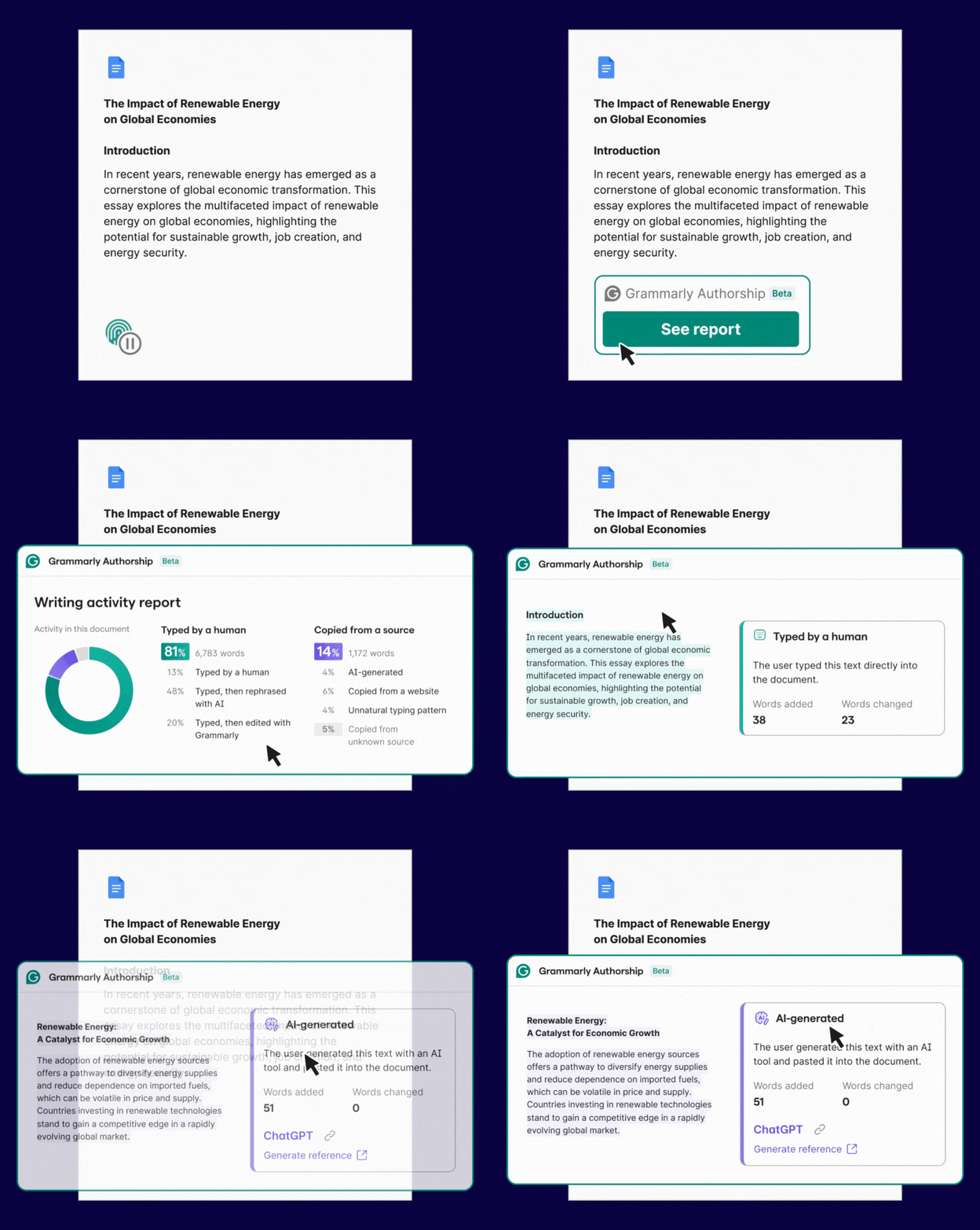
Rather than relying on AI detection tools that only estimate AI involvement, Grammarly Authorship allows you to track your writing process proactively. Turn on Authorship before beginning work in a Google Doc to automatically track and categorize whether your writing is typed, AI-generated, or pasted from an external source. This feature generates a detailed report of AI’s role in your process, allowing you to remove ambiguity, provide insight into your process, and showcase your originality.
Is ChatGPT plagiarism? Final thoughts
While ChatGPT does not inherently plagiarize, improper use, such as submitting AI-generated content without citation or failing to add original thought, can lead to plagiarism concerns.
Responsible AI use requires transparency, verification, and human input. By citing AI assistance, fact-checking sources, and refining AI-generated content, users can maintain integrity and produce authentic work.
Tools like Grammarly’s Plagiarism Checker and AI Detector help identify AI-generated text and check for plagiarism, while Grammarly Authorship provides a transparent record of how a document was created to provide proof of human input. Combining these tools with ethical writing practices ensures that AI-assisted content remains credible and plagiarism-free.
Is ChatGPT plagiarism FAQs
Does ChatGPT count as plagiarism?
ChatGPT can be considered plagiarism in some situations depending on how it was used. Using AI-generated text without proper citation or context can be flagged as plagiarism in some academic or professional settings. The responsibility lies with the user to use AI tools ethically and follow institutional or organizational guidelines when including AI assistance in their work.
Is ChatGPT 100% plagiarism-free?
ChatGPT is designed to generate original content, but it is not guaranteed to be 100% plagiarism-free. Because of how language models work, AI-generated text may sometimes overlap with phrasing found in public sources. Additionally, AI output is not inherently original if it lacks human input or misrepresents the writing process.
Does ChatGPT plagiarize?
No, ChatGPT does not inherently plagiarize, but it can still create text that closely resembles existing sources. ChatGPT generates responses in real time based on language patterns in its training data, rather than retrieving or copying content verbatim from specific sources. However, because it was trained on a broad range of publicly available texts, its outputs may occasionally resemble existing content. It’s your responsibility to review and revise AI-generated text to make sure it’s properly cited and original.
How do I avoid plagiarism using ChatGPT?
The best way to avoid plagiarism when using ChatGPT (or any AI tool) is to treat it as a writing aid, not a replacement for human thought. Use it to brainstorm or refine ideas, but make sure the final work reflects your own voice. Always check facts, add original insights, and cite sources when needed. To avoid ambiguity, use Grammarly Authorship to help verify that your writing is your own.
Can ChatGPT write essays without plagiarizing?
Yes, ChatGPT can write essays without plagiarizing because it generates new text based on patterns it learned during training rather than copying from specific sources. That said, it’s not guaranteed to be 100% plagiarism-free. Users are still responsible for ensuring academic integrity, citing sources for specific facts or data, and following any rules about AI use set by their school or organization. To add an extra layer of confidence, you can run your work through Grammarly’s Plagiarism Checker to check for plagiarism in your text and flag other writing issues.